Powered by People
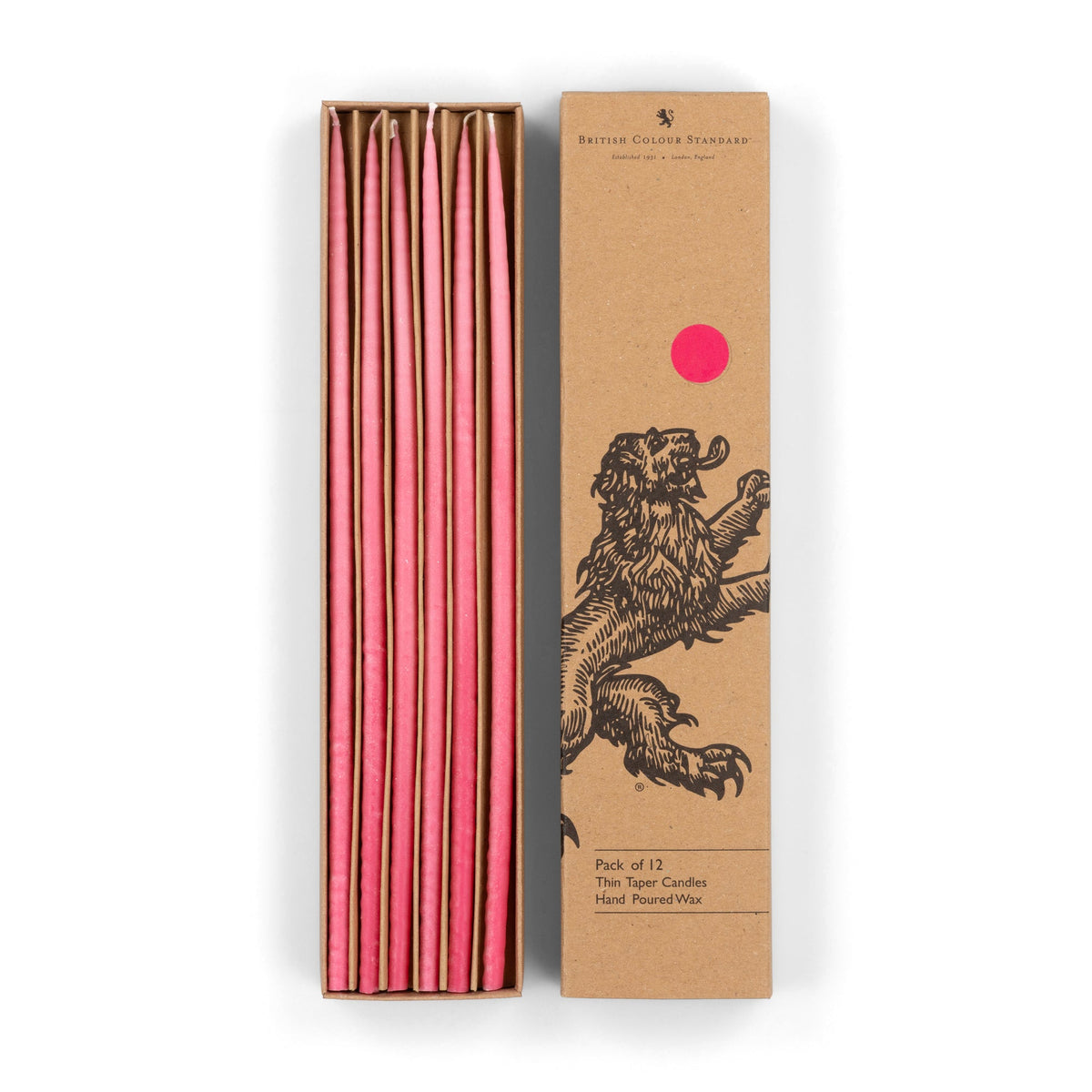
Neyron Pink Thin Taper Candles
Neyron Pink Thin Taper Candles
Couldn't load pickup availability
Some occasions call for candles. Others become occasions because you lit them.
British Colour Standard’s Neyron Pink Thin Tapers are an excellent argument for being slightly less selective about what deserves candlelight. Hand-dipped in a wonderfully unapologetic archival pink, they're slender enough for birthday cakes and charming enough for dinner tables, mantels, or a Tuesday night when takeout could use better lighting. Each burns with a tall, clean flame for up to three hours, giving you plenty of time to enjoy the peculiar way a few tiny candles can make everyone behave as though something special is happening. Keep the box nearby. Twelve candles create a surprising number of excuses.
The Details
- Set of 12 thin taper candles
- British Colour Standard archival Neyron Pink
- Hand-dipped in Indonesia
- Fair Trade made
- 25 cm / 9.84" tall
- 6 mm / 0.24" diameter
- Approx. 2.5–3 hour burn time per candle
- Tall, clean-burning flame
- Food-safe and suitable for birthday cakes
- 100% vegetable-origin stearin wax
- Pure cotton, lead- and metal-free wick
- Ecological color dyes
- Paraffin-free
- No animal-derived ingredients
- Packaged in a recyclable kraft matchbox-style box
- Hand-dipped construction means slight variations are part of their character
About the Brand: Britsh Colour Standard
British Colour Standard has built an entire design world around the radical proposition that everyday objects don't have to be visually apologetic. It started when founders Jackie Piper and Victoria Whitbread discovered an original 1930s British Colour Standard dictionary tucked away in an Oxfam shop and decided its wonderfully specific archive of historic colors deserved another life. Today, those rediscovered shades appear across candles, tableware, textiles, and objects for the home, with an emphasis on thoughtful materials, Fair Trade craftsmanship, and responsible production. It's part design archive, part color obsession, and a pretty convincing argument that progress occasionally looks like finding something old and realizing we shouldn't have forgotten it.
Share