Powered by People
Handloomed Recycled Yarn Kitchen Mat
Handloomed Recycled Yarn Kitchen Mat
Couldn't load pickup availability
The kitchen floor rarely gets invited into the decorating conversation.
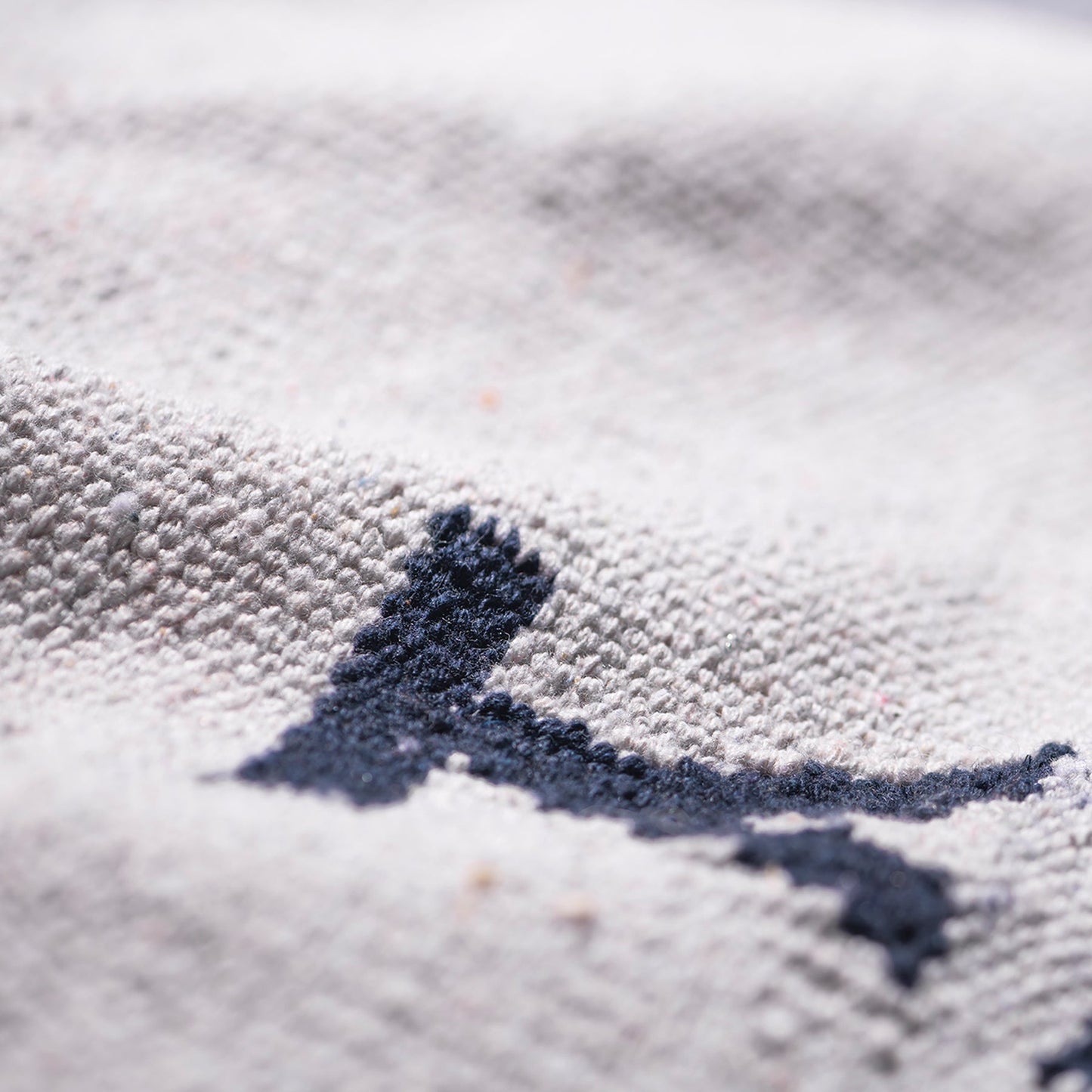
PUEBCO’s Handloomed Recycled Yarn Kitchen Mat gives it something to contribute. Made from recycled fabric in an Indian town known for textile production, each mat is individually woven on a traditional handloom by skilled artisans working on a small scale. The process creates subtle shifts in density, weave, texture, and color that would probably get corrected in mass production, which is precisely why they’re worth leaving alone. Its long, narrow proportions fit naturally in front of a sink, alongside an island, or anywhere else that could use a little softness underfoot without requiring a full-size rug. At four feet long, it adds just enough textile, texture, and evidence of an actual human hand to make a very practical part of the kitchen considerably more interesting.
The Details
- Handloomed kitchen mat
- Made from recycled fabric
- Available in White, Light Gray + Navy Blue
- 1.5' W × 4' L
- Individually woven on a traditional handloom
- Made by skilled artisans in India
- Small-scale textile production
- Variations in density, weave, texture + color are inherent to the handmade process
- Each mat will vary slightly
- Designed by PUEBCO
- White: Item No. 303130
- Light Gray: Item No. 303147
- Navy Blue: Item No. 303154
About the Brand: PUEBCO
PUEBCO has a habit of looking at things the rest of us have finished with and deciding they aren't finished yet. Founded in Japan in 2007, PUEBCO works with salvaged, recycled, and repurposed materials, including military tents, old uniforms, mail bags, truck upholstery, parachutes, and industrial fabrics, turning them into bags, clothing, rugs, storage, and objects for the home. Pieces are produced in small batches, and the quirks of the original materials are often left visible rather than engineered away. The result isn't sustainability disguised as pristine newness. Things look reused, reconsidered, occasionally imperfect, and considerably more interesting because of it.
Share